Product data strategy with real, defensible outcomes.
The PIM you bought four years ago can’t compensate for a data model built around five sales channels that’s now feeding twelve. Our product data strategy practice maps the data your operation generates against the channels it has to feed. The output is a defensible plan you can put in front of an executive sponsor, with information about the places the current model is bending and a plan to fix them.

Most product data problems aren’t tooling problems. They’re model problems.
Most product data conversations start with a symptom: search results are wrong, attribution is incomplete, marketplaces are rejecting feeds, a new channel needs attributes the catalog doesn’t have. The symptom is usually downstream of a data model that was right when it was designed and isn’t anymore. Strategy work means looking past the symptom to the architecture underneath, then designing the model that can support where the business is going.






















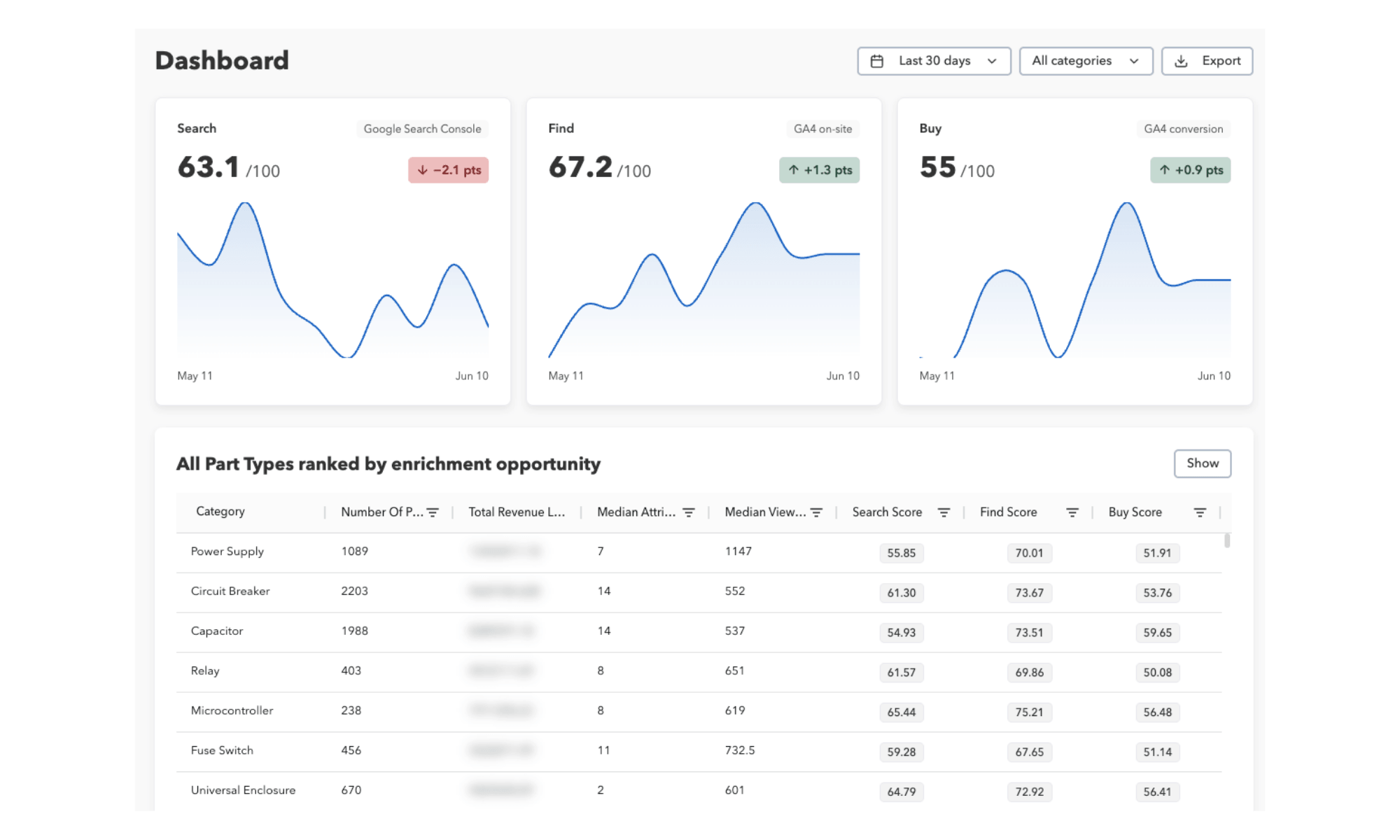
Not all SKUs are equal.
You already know your data needs work. Knowing where to start is the hard part. We find up to 3 categories that could benefit most from fixes based on your real commerce data, transform them for you, and measure the before and after to help you justify the work with real numbers. Done in 5-7 weeks at a fixed price.
Talk to us about your data issues
Every Pivotree data strategy engagement includes:

A senior data architect on point.
Not a methodology, not a deck. A practitioner who's stood up commerce data models for retailers, distributors, and manufacturers operating at the scale you're working at.
A defensible deliverable.
An artifact you can put in front of a board, a CFO, or a new CTO without re-explaining it.
A clear handoff to implementation.
Either to us, to your in-house team, or to a third party. Strategy work that can only be executed by the same vendor isn't strategy.
Buyers we hear from
most often:

VP / Director of Merchandising or Commerce facing a catalog that’s outgrown its model and needs structure before another channel launches.

CTO or VP Engineering scoping a PIM or MDM investment and needing a defensible target state to size the program.

Chief Data Officer or VP Data trying to land an enterprise-wide data strategy that doesn’t fall apart at the commerce edge.
Sonepar Canada's Success Story: Revolutionizing Data Management


data enrichment accuracy across 350,000 SKUs in 24 hours
reduction in operational costs
Product Data Strategy & Consulting FAQs
No. Strategy work is platform-agnostic by design. We deliver a target-state model and roadmap that you can execute on whatever platforms make sense for your business. If a platform recommendation is part of the engagement, it’s the right one for your operation, not the one we’re trying to sell you.
Rapid Data Assessment is two to four weeks. Product Data Assessment runs four to eight weeks depending on catalog scope. Data Strategy & Design and MDM/PIM Blueprint engagements run eight to twelve weeks.
Most engagements assume an existing data estate—sometimes pristine, usually not. The strategy work meets you where the data is. The point of the engagement is the path forward, not relitigating what’s been done.
Let’s diagnose the model.
Tell us what’s breaking, what’s coming, and what you’re trying to get done. We’ll tell you what we’d assess first.